
Types Of Sic Bo Bets – Categories, Probability And Payouts

Types of Sic Bo bets range from broad total-based selections to exact numbers, two-number combinations, doubles, and triples. At tài xỉu, users can compare winning conditions, relative probability levels, payout structures, and house edge before reading a table. Understanding how each category is settled helps beginners interpret the layout accurately, recognize triple exceptions, and avoid assuming that higher advertised payouts automatically provide better mathematical value.
How are Sic Bo bets classified on the betting table?
Understanding types of tài xỉu bets begins with grouping selections according to the result information used for settlement. Some wagers depend on the total score, others use individual values or exact combinations, while matching bets require repeated numbers.
Classification of Sic Bo betting models
Total-based bets covering ranges and exact scores
Total-based selections are settled according to the sum of all three dice. Big and Small cover broad score ranges, while Specific Total wagers require an exact combined value such as 8, 10, or 14. Odd and Even can also be classified by the final score under applicable table rules. At tài xỉu, users should verify triple exclusions because some broad bets lose when all three dice match. Learning types of Sic Bo bets requires recognizing that middle totals have more possible combinations than extreme scores, creating substantial differences in probability and published payout levels.
Number-based bets involving individual dice values
Single Number wagers focus on whether a selected value from one to six appears on any of the three dice. Depending on the game rules, the payout can increase when the chosen number appears twice or three times. The combined total does not determine whether this selection wins. During types of Sic Bo bets analysis, users should separate individual-number coverage from total-based categories. At tài xỉu, checking the paytable is important because payment ratios can differ between products. A result may simultaneously qualify for a Single Number wager and several other selections based on its total or combination.
Combination bets requiring two selected numbers
Two-number combination wagers require both selected values to appear among the three dice. For example, a Combination 2 and 5 selection wins when the final result includes at least one two and one five under the published rules. The third die can generally show another permitted value without invalidating the wager. Understanding types of Sic Bo bets means recognizing that combination selections depend on presence rather than the final total. At tài xỉu, users should inspect the official betting layout because names and payouts can vary. These bets cover fewer outcomes than broad categories and therefore usually have different payout structures.
Matching bets based on doubles and triples
Matching wagers focus on repeated dice values. Specific Double requires a selected pair, Any Triple wins when all three dice match, and Specific Triple requires one exact three-dice result such as 4-4-4. These categories have different numbers of qualifying outcomes, which directly affects probability and advertised payouts. When comparing types of Sic Bo bets, users should avoid treating every matching wager as mathematically equivalent.
Complete list of common Sic Bo bet types
The table below summarizes common types of Sic Bo bets, their winning conditions, practical examples, and relative probability levels. Exact probabilities and payout ratios can vary according to house rules, particularly when triple exclusions or alternative settlement conditions apply.
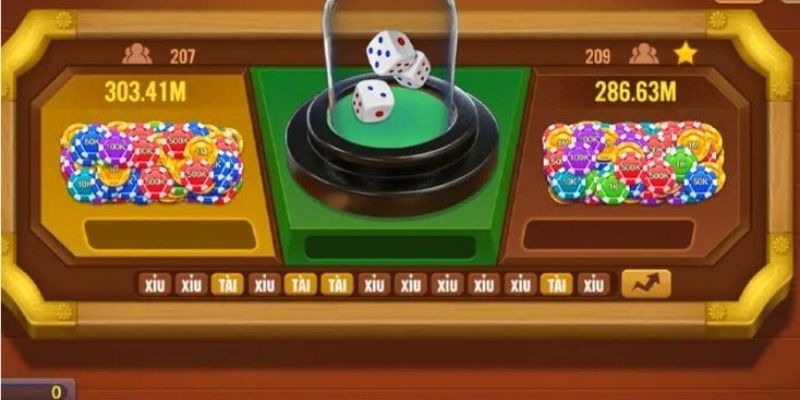
A detailed overview types of Sic Bo bets
| Bet type | Winning condition | Example | Relative probability level |
| Big | Total falls within the published higher range without an excluded triple | 3-5-6 produces 14 | High |
| Small | Total falls within the published lower range without an excluded triple | 1-3-4 produces 8 | High |
| Odd | Final total is odd under table rules | 2-4-5 produces 11 | High |
| Even | Final total is even under table rules | 2-4-6 produces 12 | High |
| Specific Total | Three dice produce the selected exact score | Selecting 10 and receiving 2-3-5 | Low to medium |
| Single Number | Selected number appears on at least one die | Selecting 4 and receiving 2-4-6 | Medium to high |
| Two-number Combination | Both selected values appear in the result | Selecting 2 and 5 and receiving 2-5-6 | Medium |
| Specific Double | Selected number appears as a qualifying pair | Selecting Double 3 and receiving 3-3-5 | Low |
| Any Triple | All three dice show the same value | Receiving 5-5-5 | Very low |
| Specific Triple | All dice show one selected value | Selecting Triple 2 and receiving 2-2-2 | Extremely low |
How Sic Bo bet types differ in probability and payout structure
Different types of Sic Bo bets produce different probability and payout profiles because each selection covers a different number of possible three-dice outcomes.

Differences in probability and payout structure between different types of bets
Why Big, Small, Odd and Even have frequent outcomes
Big, Small, Odd, and Even cover broad groups of possible results rather than one exact total or combination. Because many three-dice outcomes can satisfy each selection, these wagers occur more frequently than Specific Totals, Doubles, or Triples. Standard rules may exclude triples, reducing the winning probability and creating a house advantage. At tài xỉu, users should read the settlement conditions before comparing these bets. Understanding types of Sic Bo bets means recognizing that frequent outcomes do not guarantee long-term profit because payout ratios are designed in relation to probability and the operator’s mathematical margin.
How Specific Total probabilities change across scores
Specific Total wagers do not have equal probabilities because each score can be created by a different number of three-dice combinations. Middle totals such as 10 and 11 have more qualifying outcomes than extreme totals such as 3 or 18. As a result, payout levels can vary across the available scores. During types of Sic Bo bets analysis, users should calculate or review the number of combinations behind each total rather than assuming every exact score has the same likelihood. This distribution explains why the betting table may display different returns for neighboring Specific Total selections.
Why Double and Triple bets offer different payout levels
Double and Triple wagers differ because the number of qualifying outcomes changes substantially between categories. A Specific Double can be satisfied by more dice arrangements than a Specific Triple, while Any Triple covers six identical three-dice outcomes instead of only one. Lower-probability events generally offer higher advertised payouts, although the return may still be below mathematically fair odds. At platform, users comparing types of Sic Bo bets should examine exact qualification rules and published payments. Large payout figures should not be interpreted as evidence that a wager provides better value or a reliable opportunity for profit.
Conclusion
Types of Sic Bo bets include broad total ranges, exact scores, single numbers, two-number combinations, doubles, and triples. When learning game đánh bài , users should read the official paytable, check triple exceptions, compare probability with published returns, maintain fixed entertainment budgets, and remember that no wager category can guarantee profitable results.
Related Article
Link Judi and Slot Gacor Hari Ini: Understanding Modern Online Gaming Access