
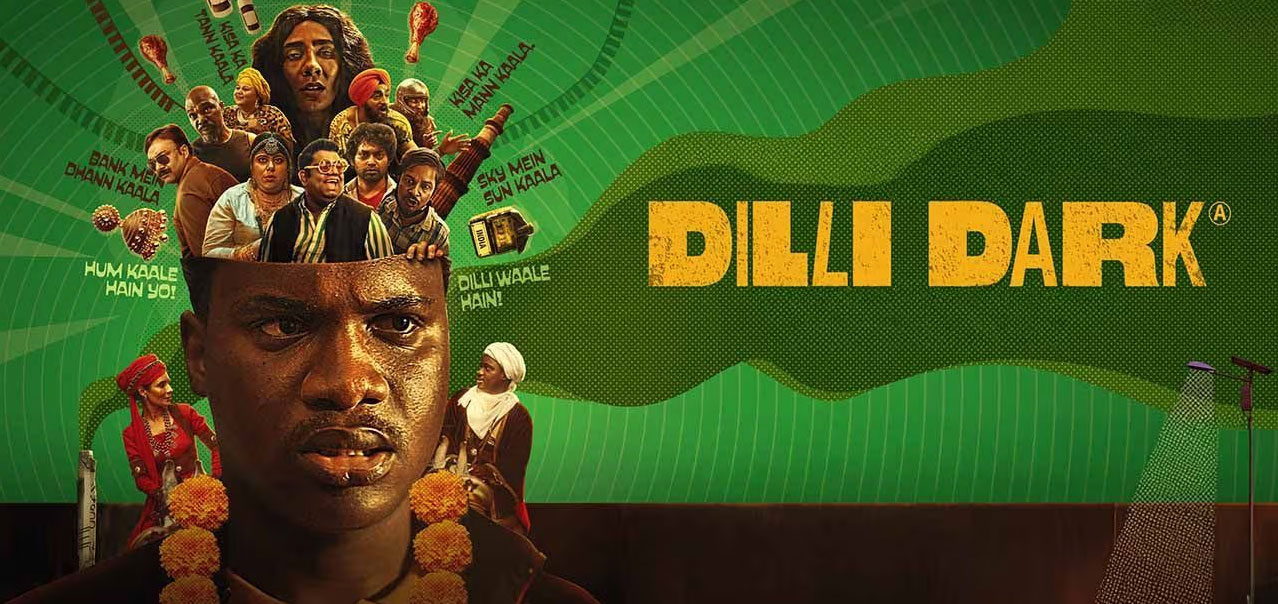

Synopsis
Dilli Dark, directed by Dibakar Das Roy, is a bold and unusual film that mixes dark comedy, social satire, and a touch of magical realism. The movie explores themes of identity, race, and belonging through the eyes of an outsider in modern Delhi.
Plot and Premise
The story follows Michael Okeke, a Nigerian man living in Delhi, navigating the city’s social dynamics, cultural barriers, and everyday challenges. Through Michael’s perspective, the film examines the contradictions of urban life—prejudices, hierarchies, and the struggle to fit in. The city itself almost feels like a character, portrayed in its raw, crowded, and chaotic reality rather than a glamorous version.
What Works
Performance: Samuel Abiola Robinson, who plays Michael, delivers a compelling performance, portraying both humor and vulnerability.
Social Commentary: The film cleverly uses satire to address issues like race, stereotyping, migration, and urban alienation.
Cinematography & Setting: Delhi is captured beautifully in its chaos and vibrancy, emphasizing the sense of being trapped or an outsider in a sprawling city.
Ambition: The movie experiments with narrative style, jumps in time, and blends genres, which is refreshing for a contemporary Hindi film.
Areas That Could Improve
Focus and Pacing: The second half occasionally loses focus, with some subplots feeling disconnected from the main narrative.
Character Depth: While Michael is engaging, some supporting characters feel more symbolic than fully developed.
Tone Consistency: The mix of dark humor, social commentary, and surreal moments sometimes creates uneven pacing.
Overall Impression
Dilli Dark is a thought-provoking film that challenges conventional Bollywood storytelling. It successfully highlights the struggles of outsiders, critiques urban prejudices, and presents a unique vision of Delhi. While it may not appeal to those seeking traditional masala entertainment, it is a rewarding experience for viewers who enjoy experimental storytelling and social commentary.
Video & Photo